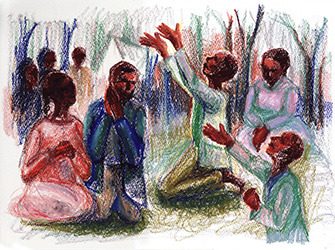
The course will examine the enduring institution and changing dynamics of the Black Church from its inception in America to the present. It will explore its changing history, theology, Biblical interpretation, culture, education, ethics, and ministry. It will examine the importance of the Black Church in the life of the community and its people. Emphasis is placed on the relationship between twentieth-century Black liberation theologies and civil rights movements. The lives and contributions of Black women and men who offered new theological interpretations and social change movements and provided a foundation for the global church in the twenty-first century are examined.
Course Learning Outcomes
Students will explore the history, theology, and biblical interpretation unique to the Black Church experience.
Beyond developing competence in various academic skills through practice and constructive feedback, e.g., careful reading, critical analysis, research, writing, and oral presentation, by completing the course, students will be able to:
● Identify how assumptions about religion have shaped how Black Americans have been seen and treated in American history.
● Assess how theology, colonialism, and race/racism have intersected in American/ Western history and the Black intellectual tradition.
● Evaluate how theology, religious ideas, and religio-racial identity and practice allowed Black Americans to critique, resist, and refuse social injustice.
● Analyze and contextualize primary and secondary sources about Black theology, religious history, identity, and culture.
● Identify the complex interactions between religious belief and practice and the rich historical, social, political, cultural, economic, and intellectual context in which religious people inhabit and live their faith
Course Learning Outcomes
Students will explore the history, theology, and biblical interpretation unique to the Black Church experience.
Beyond developing competence in various academic skills through practice and constructive feedback, e.g., careful reading, critical analysis, research, writing, and oral presentation, by completing the course, students will be able to:
● Identify how assumptions about religion have shaped how Black Americans have been seen and treated in American history.
● Assess how theology, colonialism, and race/racism have intersected in American/ Western history and the Black intellectual tradition.
● Evaluate how theology, religious ideas, and religio-racial identity and practice allowed Black Americans to critique, resist, and refuse social injustice.
● Analyze and contextualize primary and secondary sources about Black theology, religious history, identity, and culture.
● Identify the complex interactions between religious belief and practice and the rich historical, social, political, cultural, economic, and intellectual context in which religious people inhabit and live their faith
- Teacher: Dara Delgado